Table of Contents
Columbia County Courts, PA *

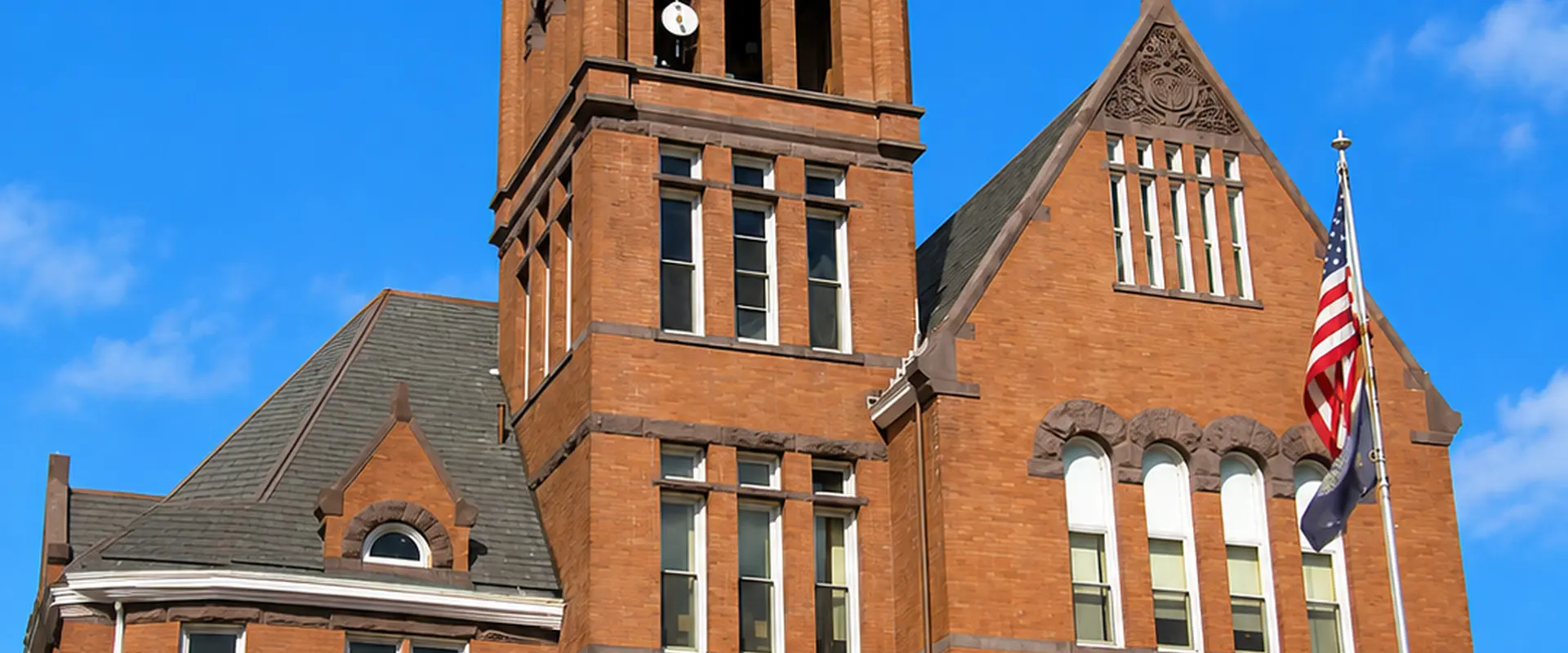
Columbia County has a population of over 60,000 people, all living and working in the region. Bloomsburg is the county seat and has the historic Columbia County Courthouse. The thousands of people in Columbia County turn to the various courts for urgent answers. Both residents of rural and urban settings in the county go to the courts to resolve their disputes, interacting with the courts in various capacities. Some are legal professionals representing their clients, some are companies and institutions dealing with lawsuits, while others are individuals researching their family ties.
Overview of the Columbia County Court System
Columbia County is under the unified judiciary of Pennsylvania, which has a hierarchical court structure. At the top of the judicial pyramid of Pennsylvania is the Pennsylvania Supreme Court, which usually has seven justices and is known as the "Court of Last Resort", where final judgment is given when cases are appealed from the lower courts. The next level down consists of two appellate courts, the Superior Court and the Commonwealth Court, which usually hear appeals from the top county-level court.
The highest trial court in Columbia County is the Court of Common Pleas. It is presided over by judges, though jury trials sometimes take place. There is one such court in the county, tasked with handling the most serious offenses, where the stakes are high. Lastly, at the lowest level of the county court system, there are the Magisterial District Courts. These are the most accessible courts for the people, and four such courts operate in Columbia County. Therefore, there are two main courts in Columbia County, each with its own jurisdiction.
Types of Courts in Columbia County, Pennsylvania

Columbia County is part of the 26th Judicial District, which hears cases from both Columbia and Montour counties. There are two main types of courts serving the region, each with its own functions.
 Court of Common Pleas
The Court of Common Pleas in Columbia County is at the highest level, meaning it has general jurisdiction. It hears the major cases in the region, like the following:
- Civil matters
- Criminal cases
- Probate
- Estate
- Juvenile delinquency
- Juvenile dependency
- Family law
- Appeals from the other local courts
The Court of Common Pleas operates at the highest level, handling major cases and those outside the jurisdiction of the local courts. The massive civil, criminal, family, and juvenile cases are all determined here, but it is not the final say. Any party dissatisfied with the outcome of this court may appeal to the state-level appellate courts. This court also hears cases transferred from the lower courts, either after preliminary hearings or when parties seek to appeal.
Primary Location: Columbia County Courthouse
Magisterial District Courts
There are five Magisterial Courts in the district, but four in Columbia County. Magisterial District Courts serve the local communities of Columbia County. They are the Columbia County Magisterial District Courts 26-2-01, 26-3-01, 26-3-02, and 26-3-03. They are called the people's courts and have the following jurisdiction:
- Preliminary hearings
- Evictions
- Misdemeanors
- Traffic tickets
- Trespassing
- City code violations
The Magisterial Courts are the lowest level for hearing cases in Columbia County. This means that these courts are usually the first point of contact between the people and the court system. They are presided over by elected magisterial judges and are tasked with conducting preliminary hearings to determine whether cases can be transferred to the Court of Common Pleas and handling minor cases. If the parties are dissatisfied with the judgment passed here, they can appeal to the Court of Common Pleas.
Primary Locations: Various City Halls and Municipal Buildings
How to Access Columbia County Court Records

Researchers, legal professionals, and individuals who wish to access Columbia County Court records can find them through any of the following methods.
 Online Access
The Unified Judicial System of Pennsylvania makes court records accessible to the public through a single portal. The state provides the Pennsylvania Judiciary Web, a system that compiles records from all the courts throughout the state. Parties can use this system to access records from the lower Magisterial Courts to the Pennsylvania Supreme Court. This platform also contains records of various types of cases, even minor ones like traffic tickets and serious ones like huge civil lawsuits and criminal offenses. Inquirers only need to enter the case details, such as the parties' names and the case number, to access it.
 Alternative Online Options
Online record searches are among the most convenient ways to access court records. From anywhere the parties are, they can simply log in to the system and, after entering the required details, access. In addition to the state-provided platform, people in Columbia County can also use alternative online options to find court records. CourtCaseFinder, for instance, is a handy tool that features a massive database of records, not just in Pennsylvania but also from other states and their counties. This is even more convenient because the files can be retrieved from a single platform, saving the inquirer time and hassle.
 In-Person Requests
What happens when the required files are not available on any online portal? When this happens, parties may seek the records in person. Although it will take a bit longer, there is a high chance that the records will be available at the respective clerks' offices. The County Clerk or the Prothonotary is responsible for maintaining the criminal and civil records, respectively, of the Court of Common Pleas, while the clerks of the various Magisterial Courts maintain records for their courts. So, if parties want to make in-person inquiries, they can do so at the relevant clerk's offices.
 Archived Records
Sometimes, the searches above are unsuccessful, meaning the records are not available on any online platform and cannot be found at the clerks' offices. This could be because the records are older and are in the state's archived files. If they predate modern systems, then they are not digitized. Parties can search for these records at the Pennsylvania State Archives for Historical Records. This is a valuable database that helps inquirers access historical files and genealogical records dating back over 200 years. For these records, they may have to make formal requests for access, which means that this record can take quite some time, depending on the type.
For Attorneys and Legal Professionals
Attorneys and legal professionals know that a great deal is at stake when interacting with the various courts in Pennsylvania. They may follow a simple structure as guided by the unified court system, but there are strict rules, especially regarding conduct. The Pennsylvania Rules of Professional Conduct guide legal professionals on how they are expected to carry themselves. It directs them on how to respect the chambers, how to address people in the court, how to dress, and how their clients should behave during proceedings. They know that breaking any of these rules could lead to dire consequences.
Lawyers and legal professionals also know how they should take on cases, where to file, and how to access past court records. Luckily, records are available for public access online, so even if they have several cases and multiple records to find, they can use a reliable third-party search portal to find what they need. This means they can conveniently access records from any state and county, making them more efficient and saving them a lot of time.
How to File a Case in Columbia County

Whether the parties are legal professionals or first-timers representing themselves in court, there are simple steps to follow when filing cases in Columbia County.
 Step 1: Choose the Correct Court
There are two main courts in Columbia County, Pennsylvania: the Court of Common Pleas and the Magisterial Courts. These two are distinct in their duties and jurisdiction, so when parties file cases, it is important to know exactly where the case belongs so it can be heard by the appropriate chambers. If it is a preliminary hearing, a landlord-tenant issue, or any minor dispute, it should be filed in the lower courts. The major lawsuits and family matters will, however, be determined at the Court of Common Pleas. Parties want their cases to be assigned to the right chambers to avoid unnecessary delays.
 Step 2: Complete Required Forms
Since the first step of identifying where the case will be filed is complete, the next step for the parties is to file their case by completing the required forms. These forms are available online and can be accessed through the relevant clerks' offices. It is how they can introduce themselves to the courts and notify them of the type of case they are filing, besides other necessary details. When these files are downloaded or handed to the filers at the clerks' offices, the filers must ensure they carefully read the instructions and fill in all the blanks.
 Step 3: File the Case
Pennsylvania mandates that all legal professionals and self-representing individuals file their cases online. From wherever they are in the state, they can log into PACFile, a digital system designed for filers to conveniently enter their cases. It doesn't matter what type of case it is or how serious it is. All of them are filed electronically. This also applies to the various courts, as parties can file in the highest court in the county or in local courts. The details will go to the single system. They will sign in and use their credentials to access the platform to proceed with the next steps in filing.
 Step 4: Pay Filing Fees
It is mandatory that filers pay the recommended prothonotary fees in accordance with the current schedule. The fee must be paid when the parties submit their files, or the process won't be successful. These fees are usually dependent on the type of case being filed and its magnitude. Often, the more serious the case, the higher the expected fees. The rates can be so high that some parties may be unable to afford the amount. Luckily, the state allows eligible low-income parties to apply for fee waivers. Deserving parties can fill and submit the Petition to Proceed IN FORMA PAUPERIS (IFP), and if accepted, they can proceed with the case without fees.
 Step 5: Serve the Other Party
It is also mandatory that the party filing a case against another should complete the service of process. This means that the filer must notify the other side that a case is being filed against them. This gives them a much-needed heads-up so they can also get their defense ready and prepare for the court processes. Service is usually done by a certified process server working in Columbia County, a sheriff, or a constable. The filer is not allowed to serve, and the documents must be hand-delivered to the opposing side. Proof of the process will also be retained for submission to the court, allowing the case to proceed.
 Step 6: Monitor the Case
The PACFile system is not only for filing cases. When they go to the database, they are also managed there, allowing the filer to monitor the case. They can see what is happening behind the scenes. This way, they always stay prepared. Tracking the case means they always know about ongoing activities, such as when court dates are set, when the case will be mentioned, when documents have been submitted, and many other details that will influence the outcome. This goes a long way so that the filers are always a step ahead, ready to present their case in court.
Columbia County Courthouse Directory
Below are the addresses and the contact details of the two main courts operating in Columbia County, Pennsylvania.
Bloomsburg Courthouse
Home to the 26th Judicial District Court of Common Pleas.
Bloomsburg
Address: 35 West Main Street, Bloomsburg, PA 17815
Phone: (570) 389-5667
Website: 26th Judicial District Court
Magisterial Courts of Columbia County
The people's courts that conduct preliminary hearings and handle minor cases across the county.
Magisterial District Court 26-2-01
700 Sawmill Rd, #102, Bloomsburg, PA 17815
(570) 784-1868
Magisterial District Court 26-3-01
100 W 3rd St, P.O Box 180, Millville, PA 17846
(570) 458-5501
Magisterial District Court 26-3-02
338 W Front Street, Berwick, PA 18603
(570) 759-0359
Magisterial District Court 26-3-03
400 Fisher Avenue, Catawissa, PA 17820
(570) 356-2309
Legal Help and Self-Help Resources
So many vulnerable communities suffer when it comes to finding legal support. Low-income families, the elderly, people living with disabilities, and other marginalized groups are the most affected. The good news is that several non-profits in Columbia County are working to ensure they receive the legal help they need.
 Free Legal Assistance
North Penn Legal Services reaches out to low-income families, helping them gain access to legal representation. It operates in northern Pennsylvania, offering a wide range of services, including litigation, referral programs, and legal advice through its emergency helplines. They also conduct community sensitization programs. For people living with disabilities, the agency Disability Rights Pennsylvania steps in to assist with various legal issues. They help those affected with their employment, housing, education, and other matters, ensuring their rights are upheld. Eligible members can apply for assistance through their hotline numbers, and if eligible, they will receive the legal help they need.
 Local Legal Support
The Women's Center Inc offers legal support to victims of domestic and sexual violence. Their 24-hour hotline operates in Montour and Columbia Counties, ensuring that survivors get the justice they rightfully deserve. They aim to create a safer world for affected people and to conduct civic education in various communities. The National Veterans Legal Service Program also operates in Columbia County and its neighboring counties, serving veterans free of charge and ensuring they receive the legal help they need. The agency conducts advocacy and files civil lawsuits so that veterans have support during proceedings.
FAQs
Are court records public in Columbia County?
Pennsylvania mandates that all court and government records be made public for the people of Columbia County. They can access the court records from past cases as long as they are available in online portals and can be retrieved from the clerks' offices. The public can freely access and obtain copies of these records.
How do I access court records in Columbia County?
Parties can access court records through various methods. They can use the state-provided online portal, third-party sources like CourtCaseFinder, clerks' offices, or the archive library. Online sources are, however, more convenient since parties can find records from wherever they are, and the results are usually retrieved instantly.
Which court records are not available to the public in Columbia County?
There are cases that are sealed or restricted, so the public cannot freely access them. Usually, these are records concerning juvenile cases and family law, where the courts seal the records to protect the identities of the parties involved. They grant them their privacy by either redacting or sealing the records.
How long does it take to access court records in Columbia County?
The time required to access court records usually depends on the type of case and the method used for access. Usually, online court systems are more convenient, providing results in a matter of seconds, but it will take longer with an in-person request at a clerk's office or a request for records from an archives database.
How do I track my case in Columbia County?
After filing a case using the electronic system PACFile, parties can also track its progress through the same system. They only need to enter their login details, allowing them to monitor all activities related to the case. This provides important details of the case so the filers can be more prepared.
Other Counties in Pennsylvania
- Adams
- Allegheny
- Armstrong
- Beaver
- Bedford
- Berks
- Blair
- Bradford
- Bucks
- Butler
- Cambria
- Cameron
- Carbon
- Centre
- Chester
- Clarion
- Clearfield
- Clinton
- Crawford
- Cumberland
- Dauphin
- Delaware
- Elk
- Erie
- Fayette
- Forest
- Franklin
- Fulton
- Greene
- Huntingdon
- Indiana
- Jefferson
- Juniata
- Lackawanna
- Lancaster
- Lawrence
- Lebanon
- Lehigh
- Luzerne
- Lycoming
- Mckean
- Mercer
- Mifflin
- Monroe
- Montgomery
- Montour
- Northampton
- Northumberland
- Perry
- Philadelphia
- Pike
- Potter
- Schuylkill
- Snyder
- Somerset
- Sullivan
- Susquehanna
- Tioga
- Union
- Venango
- Warren
- Washington
- Wayne
- Westmoreland
- Wyoming
- York
Table of Contents
