Table of Contents
Delaware County Courts, PA *

Like any other Pennsylvania county, Delaware County has a trial court system designed to handle all legal issues affecting the people, ranging from minor traffic infractions to serious felony-level criminal cases. The court system has two trial-level courts, each playing a role in ensuring that people receive justice.
Delaware County is located at the southeastern corner of the state, next to Philadelphia. With a population of over 500,000, the courts have a heavy caseload, making the process of seeking justice challenging. Having basic knowledge of the courts, such as the types of courts and their responsibilities, saves people time and reduces frustration during the court process.
Overview of the Delaware County Court System
The people of Delaware County get their services under the 32nd Judicial District of Pennsylvania. As mentioned earlier, the county has only two trial courts that handle all legal matters affecting the people. At the top is the Court of Common Pleas, which handles major civil and felony-level issues that affect the people, while at the lower level, we have the Magisterial District courts, which handle minor issues and serve as the entry point for residents to the courts.
The Court of Common Pleas has divisions, including the Criminal Division, Civil Division, Family Division, and Orphan Division, each responsible for handling specific types of cases. Due to its vast geographical area and population, the county has 30 Magisterial Courts spread across the county to ensure justice reaches the people, including those in rural areas. Residents who know the types of courts and what they do are in a much better position when seeking justice than those who have no idea of the process.
Types of Courts in Delaware County, Pennsylvania

When one has a legal matter, the first step is to identify the court with jurisdiction over the matter. In Delaware County, there are two trial courts, each with its own jurisdiction. The section below provides a detailed description of the courts and their functions.
 Court of Common Pleas
Delaware County has a Court of Common Pleas, which has general jurisdiction over all legal matters not handled by the Magisterial District Courts. The court is responsible for handling the bulk of serious issues the people face. It has jurisdiction over:
- Felony criminal proceedings
- Family law matters
- Appeals from the lower courts
- Juvenile matters
- Probate matters
Because the Court of Common Pleas covers a wide range of matters, it has been divided into several divisions that handle specific areas. The Family Division takes care of family-related issues like divorce, child custody, spousal support, and protection from abuse. The Criminal Division is responsible for handling felony-level criminal matters. The Civil Division handles civil issues that exceed the dollar amount handled in the lower court. The Juvenile Division handles delinquency and dependency cases involving parties under 18. Lastly, the Orphans' Court is responsible for probate matters, including estates, guardianships, adoptions, and trusts.
Primary Location: Delaware County Court
Magisterial District Courts
Delaware County is one of the largest counties, with 30 Magisterial Districts that each have a court handling legal issues for the people in those localities. In most cases, the Magisterial District Courts are the first courts the people of Delaware County get to encounter and may be the only ones. The courts are presided over by a judge who is elected and serves for six years. The courts handle:
- Traffic violations
- Summary of criminal offenses
- Civil claims up to $12,000
- Bail setting
- Preliminary hearing for misdemeanor and felony cases
Apart from the trial issues, these are the courts that have the power to perform wedding ceremonies and administer oaths. In most cases, the processes are informal compared to those of the Court of Common Pleas, and people can navigate the process without lawyers. People who need to pay fines and court costs can do so online through the ePay system.
Primary Location: Delaware County Magisterial District Courts locations
How to Access Delaware County Court Records

Delaware County aligns with Pennsylvania State law, which considers its court records public. However, there are certain records that the courts consider confidential. These records include sealed cases marked as confidential, specific family court filings, and juvenile records
 Online Access
The Pennsylvania Unified Judicial System (UJS) embraces and supports the use of online platforms to provide the public with access to court records. It allows the public to search using an attorney, docket number, or party name. The search will give them access to docket sheets from the Common Pleas Court and the Magisterial District Courts, ensuring they are kept up to date on the case's progress.
Also, Delaware County has ensured that people facing criminal cases in the Court of Common Pleas can receive case updates through the Judicial Support office's dedicated criminal docket page.
 Alternative Online Options
Apart from the official sites that are limited by state or county, the people of Delaware County have the option to use third-party tools like CourtCaseFinder to conduct a broader search. The portal aggregates information from different court sites and puts it in one place. For this reason, people who are unsure which court a case was filed in can still access court records with a single search. It saves them the time they would have spent searching many sites before finding the case they are trying to locate.
 In-Person Requests
In-person record access is a good option for those whose records are not online or for certified documents. For instance, restricted case information, such as juvenile cases, cannot be found online for privacy reasons; hence, the only way to obtain it is by visiting the Office of Judicial Support for identification before gaining access. The office handles records of all the civil and criminal matters. The staff is always available to help people with certifying court documents, conducting docket searches, and confirming filings, but they do not provide legal advice. For those who need records from the 30 Magisterial District Courts, the best place to visit is the district court for the relevant district.
 Archived Records
Depending on how long a record has been stored, it may not be available online. Records that predate the electronic filing era exist in the county's archive system. If one needs access to such information, the Office of Judicial Support will advise on the best steps to take. If they are not available at the local office, they might have been transferred to the Delaware County Historical Society or other archival institutions. The Pennsylvania State Archives, located in Harrisburg, is where researchers can go for genealogical or historical research.
For Attorneys and Legal Professionals
Attorneys admitted to practice in Pennsylvania can gain early access to the Unified Judicial System (UJS) portal. By registering and getting an access code, they will be able to use the PACFile, which will allow them to file some cases and register for automated notifications of case updates. Lawyers can also benefit from the Delaware County Bar Association, which has courthouse links and local court information.
Before proceeding with any court process, the lawyers must take the time to review the local rules for the 32nd Judicial District. They contain county-specific procedures for civil and criminal cases to guide lawyers through the process. The local rules can be accessed from the Delaware County Court's website or the Pennsylvania Courts Administrative website. Not following the rules can lead to a case being delayed or dismissed.
How to File a Case in Delaware County

While Pennsylvania allows people to file their cases as self-represented litigants, the process can be frustrating, especially if one lacks knowledge of how to proceed. The progress can be much easier if an individual has prior knowledge of the steps to follow when filing. Below are some general steps filers can follow.
 Step 1: Choose the Correct Court
When one has a legal issue that needs the intervention of the courts in Delaware County, the first thing they should do is to identify the court that will handle their case. The good thing is that Delaware County only has two options to choose from. Serious issues are taken to the Court of Common Pleas, and minor, everyday issues are taken to the Magisterial District Courts. Serious felony criminal and civil matters with claims above $12,000, domestic matters, and probate issues go to the Court of Common Pleas, which operates in different divisions. The Magisterial District Courts are divided into 30 districts, each with a court that handles minor issues at the entry level. Choosing the right court is one step towards a successful filing process.
 Step 2: Complete Required Forms
Usually, the type of case people are filing and the court in which the case is filed determine the forms one fills out when filing. Pennsylvania makes them accessible to the people through the UJS Web Portal. Delaware County also has its own locally available forms through the Office ofJudicial Support. Also, the Office of the Register of Wills can help with forms for the Orphan Courts. Self-represented litigants can use the 2024 Delaware County Family Court Self-Represented Litigant Guide to help them through the process, reducing the chances of filing errors. Accuracy is key when filling out the forms. Not doing it right might lead to case dismissal or delays.
 Step 3: File the Case
Filing can either be done in person or electronically if people are representing themselves, but legal professionals must file online. The Office ofJudicial Support is where cases involving serious issues in the Court of Common Pleas are filed. The minor issues are filed in the Magisterial District Courts, which are located in the geographical area where the dispute took place. Some case documents, especially those of the Orphans' Court, are to be submitted electronically through the PACFile portal. When one files, they are assigned a docket number to help them track the case going forward.
 Step 4: Pay Filing Fees
Residents are required to pay a specific fee depending on the case type and court in which it is filed. In most cases, the small claims at the Magisterial District Court cost less than those at the Common Pleas Court. In Delaware County, civil complaints, divorce filings, and Orphans' court petitions each carry different fee schedules that are periodically updated. People who may not be able to afford the fee are advised to apply for a fee waiver by submitting a petition for in forma pauperis status with the complaint for the court to review and determine eligibility.
 Step 5: Serve the Other Party
When one files a case, it is mandatory to inform the other party of the lawsuit before proceeding to the next step. The method used depends on the case at hand. In civil cases, service can be effected by the Sheriff's Office, certified mail, or, in some circumstances, by posting. For those involved in Family Law matters, it is important to check the Delaware County Local Rules for specific procedures that guide the process. For the case to proceed, the proof of service must be filed with the court.
 Step 6: Monitor the Case
Finally, having taken every step correctly, the court schedules the appearance dates, which parties must strictly adhere to. Noncompliance may lead to a default judgment, dismissal, or an arrest warrant. Use tools such as the UJS Web Portal to track the case. It allows the citizens to search for case information like the party's name, docket number, or date range for free, and they get access to index information about the case.
Delaware County Courthouse Directory
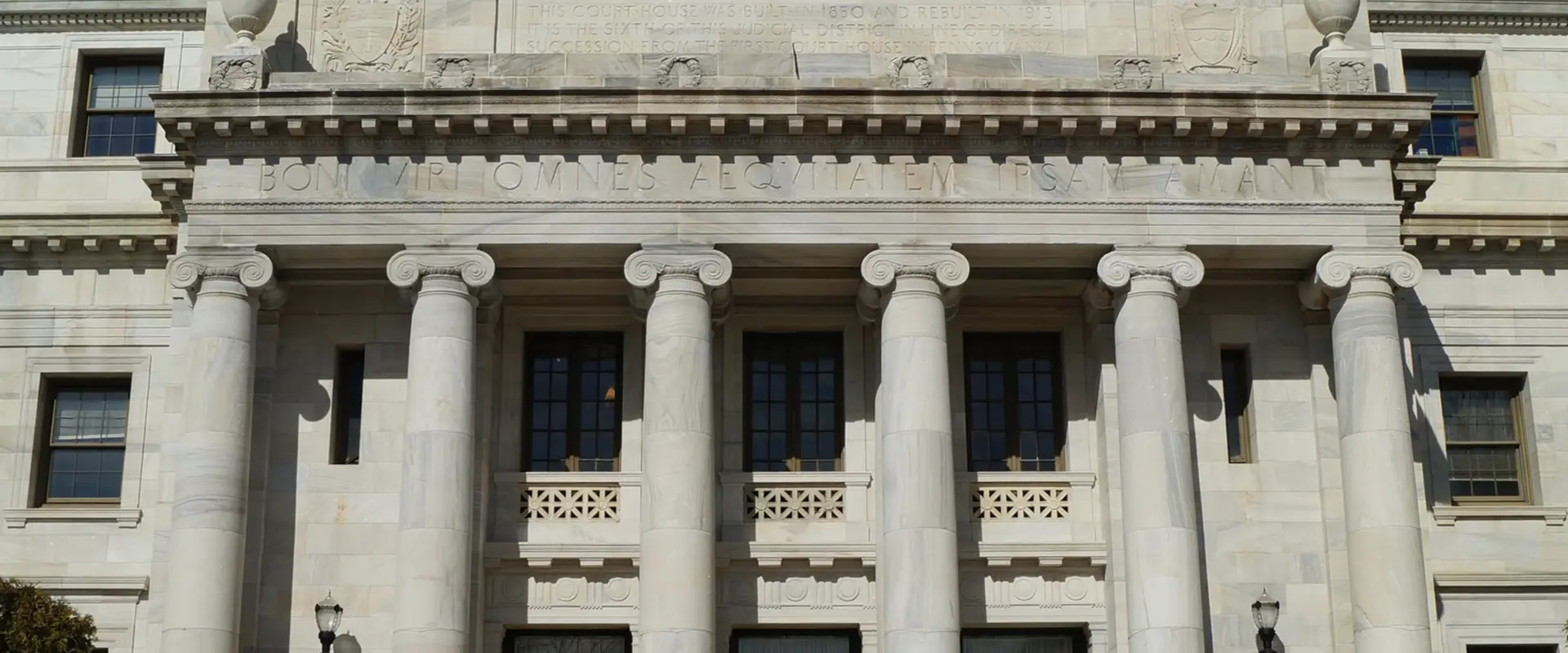
Delaware County Courthouse
Hosts the Court of Common Pleas, which deals with major criminal and civil matters.
Media
Address: 201 West Front Street, Media, PA 19063
Phone: (610) 891-4000
Website: Court of Common Pleas
Magisterial District Courts
Delaware County has 30 Magisterial Districts, each with a court that handles the legal issues of the people in those localities. All the contact information of the Magisterial Courts is at the link below:
Website: Magisterial District Courts
Legal Help and Self-Help Resources
A significant number of people seeking justice find the cost of hiring an attorney prohibitive. While some people may not need representation, there is a need to ensure that those who require assistance can access it through various networks. There is a solid infrastructure of self-help resources and legal aid in Pennsylvania that seeks to bridge this gap.
 Free Legal Assistance
The first freely available source of help is the Legal Aid of Southeastern Pennsylvania (LASP), which provides low-income people in Delaware County with civil legal services. They handle cases like housing, family law, domestic violence, and Protection from Abuse orders. The other available option is the Delaware County Domestic Abuse. It helps with cases involving domestic violence. The service can respond instantly and provide legal aid and referrals to victims.
 Local Legal Support
Apart from the free options, they can take advantage of the several local options available. The Delaware County Bar Association has a Lawyer Referral Service that connects people with private attorneys in the area who offer a reduced initial consultation fee. Also, the Francis J. Catania Law Library, located at the Delaware County Courthouse, is a good option for case law reporters, legal forms, and reference materials. The staff are always ready to help in locating the exact file one needs, but cannot give legal advice.
Additionally, Pennsylvania has the Unified Judicial System's self-help resources, which include plain-language guides explaining various court procedures. Also, it has standardized forms for cases like custody, divorce, landlord-tenant matters, and small claims. Lastly, people can take advantage of the Pennsylvania Bar Association, which connects them with licensed attorneys practicing in the area.
FAQs
How do I look up a court case in Delaware County?
The majority of case records are publicly available via online portals maintained by the courts. For example, the Pennsylvania UJS Web Portal provides free public docket sheets for Common Pleas and Magisterial District Courts. CourtCaseFinder, an alternative online tool, collects information from official court sites and makes it available to the public who want to conduct a broader search beyond Pennsylvania.
What is the difference between the Magisterial District Court and the Court of Common Pleas?
The huge difference between the two courts is the jurisdiction. The Court of Common Pleas is the highest trial court with general jurisdiction over all matters not heard by the other courts. It handles serious felony criminal and civil matters of claims above $12,000, domestic matters, and probate issues. On the other hand, the Magisterial District Court handles minor issues affecting people daily at the local level, such as traffic infractions and preliminary hearings.
What are the filing fees for Common Pleas Court cases?
The filing fee varies depending on the type of case and court. In most cases, the small claims at the Magisterial District Court cost less than those at the Common Pleas Court. In Delaware County, civil complaints, divorce filings, and Orphans' Court petitions each carry different fee schedules that are periodically updated. People who may not be able to afford the fee are advised to apply for a fee waiver by submitting a petition for in forma pauperis status with the complaint for the court to review and determine eligibility.
How long does it take to get records in Delaware County?
The wait time depends on the method used to search court records. Inquiries made through the UJS Web Portal return immediate results. For in-person requests, results may be available the same day or take up to 3 days, depending on the volume of requests. Sealed cases that require a court order take longer due to processing and approval requirements.
How long does it take for a civil case to go to trial in Delaware County?
The time a civil case takes to go through trial depends on the judge's availability and the complexity of the matter. In most cases, those with a certain dollar threshold pass through the mandatory arbitration before they go to a judge. Cases that reach trial take longer than those resolved in arbitration. Family Law matters like divorce and custody can take even longer, sometimes months.
Other Counties in Pennsylvania
- Adams
- Allegheny
- Armstrong
- Beaver
- Bedford
- Berks
- Blair
- Bradford
- Bucks
- Butler
- Cambria
- Cameron
- Carbon
- Centre
- Chester
- Clarion
- Clearfield
- Clinton
- Columbia
- Crawford
- Cumberland
- Dauphin
- Elk
- Erie
- Fayette
- Forest
- Franklin
- Fulton
- Greene
- Huntingdon
- Indiana
- Jefferson
- Juniata
- Lackawanna
- Lancaster
- Lawrence
- Lebanon
- Lehigh
- Luzerne
- Lycoming
- Mckean
- Mercer
- Mifflin
- Monroe
- Montgomery
- Montour
- Northampton
- Northumberland
- Perry
- Philadelphia
- Pike
- Potter
- Schuylkill
- Snyder
- Somerset
- Sullivan
- Susquehanna
- Tioga
- Union
- Venango
- Warren
- Washington
- Wayne
- Westmoreland
- Wyoming
- York
Table of Contents
