Table of Contents
Lebanon County Courts, PA *

Lebanon County Courts in Pennsylvania have been established to handle all legal issues, from minor traffic infractions to serious felony cases. Pennsylvania has a two-tiered trial court system, with each court having its own jurisdiction. At the top of the trial court tier is the Court of Common Pleas, and at the bottom tier are the Magisterial District Courts. People seeking justice need a basic understanding of the courts and how they operate.
Going through any court process can be frustrating. Residents must be informed about the different types of courts and their roles in the judicial system to achieve an effective outcome in their cases. Knowing where to get legal assistance whenever residents have an active case can make a huge difference in the court process.
Overview of the Lebanon County Court System
The people of Lebanon County are served by Pennsylvania's 52nd Judicial District, which is under the Administrative Office of Pennsylvania Courts (AOPC). Located in the Central part of Pennsylvania, the county has a population of approximately 150,000 people who present legal issues to the courts daily.
In Lebanon, people receive services through the two-tier court system. The Court of Common Pleas is at the top of the structure and handles the major issues. Beneath it is a network of Magisterial District Courts that handle lower-level cases in the county's towns and villages.
People seeking justice in the court system need basic information about the types of courts and how they operate to ensure a seamless court process. Also, they should be informed about where to find free, local legal resources to help them avoid legal mistakes that can undermine their justice.
Types of Courts in Lebanon County, Pennsylvania

The people of Adams County have two courts mandated to perform different responsibilities. When a citizen has a court issue, they will need to select the court that handles their specific matter.
 Court of Common Pleas
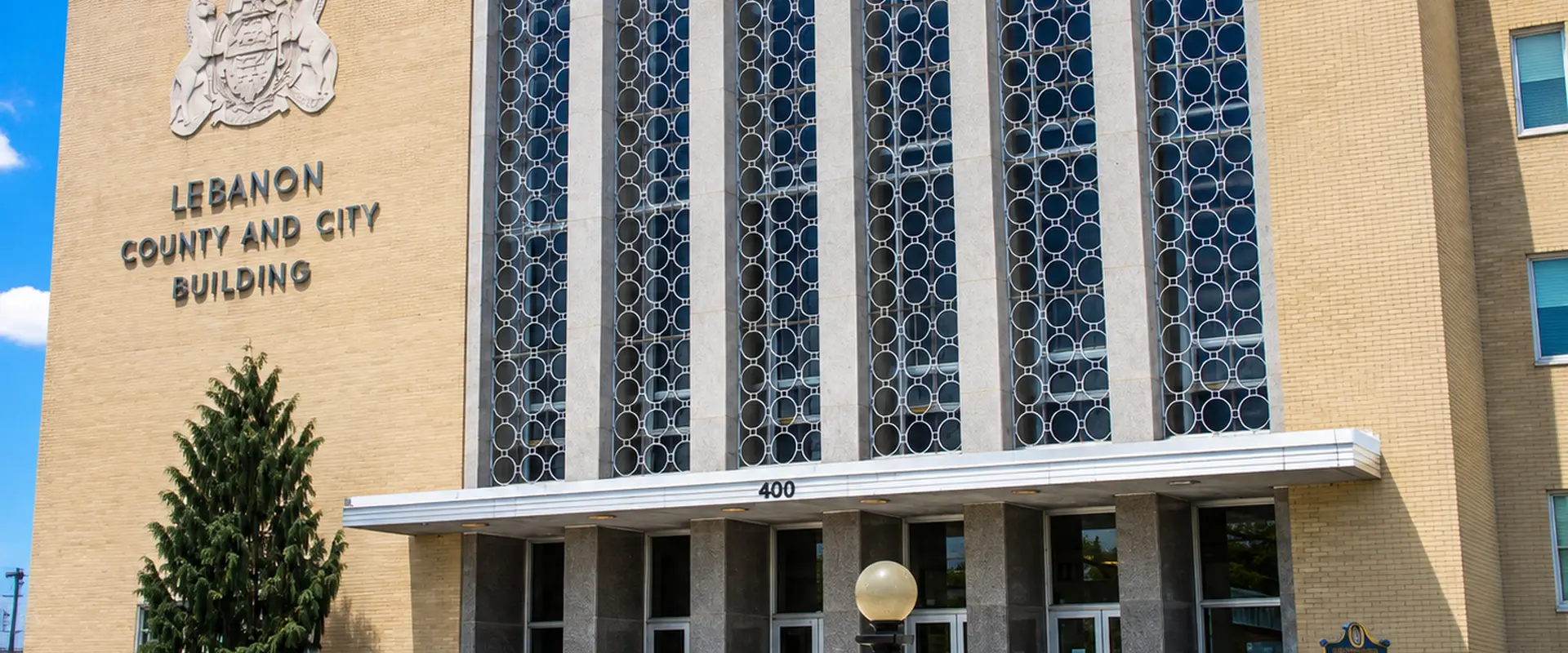
The Lebanon County Court of Common Pleas is the general-jurisdiction trial court of the 52nd Judicial District of Pennsylvania. It is the county's highest local court and is located inside the Lebanon County Municipal Building. It presides over the following legal matters:
- Felony criminal trials
- Major civil lawsuits over $12,000
- Divorce, custody, and child support
- Equity actions, partitions, and declarations
- Orphans' Court matters
- Juvenile cases
- Appeal from the lower courts
- Protection from Abuse (PFA) final orders
To ensure a quick legal process, the Court of Common Pleas has divisions with different responsibilities, including Criminal, Civil, Family, and Orphans' Divisions. As much as the judges take the frontline in ensuring justice, the court requires the administration to run smoothly. The Clerk of Court assists with records of criminal cases, and the Prothonotary aids in obtaining records and filing civil cases.
Primary Location: Lebanon County Municipal Building
Magisterial District Courts
Lebanon County is divided into five Magisterial Districts, and each one has a court that serves the people of a specific geographic area. The five courts are spread across the county to ensure that the people get justice at the lower level. The Magisterial District Courts preside over the following cases:
- Civil matters with claims below $12,000
- Landlord-tenant dispute
- Local ordinance violations
- Preliminary arraignment and preliminary hearings
- Summary criminal offenses
- Traffic citations and vehicle code violations
For those who are not satisfied with the ruling at the Magisterial District Court, they can appeal to the Lebanon County Court of Common Pleas, where the case is heard de novo, which means entirely afresh with no defense to the Magisterial District Court's finding. Summary criminal offenses represent those offenses that usually result in fines, not jail time.
Primary Location: Lebanon Municipal Building, Magisterial District Court Buildings located throughout Lebanon County
How to Access Lebanon County Court Records

Lebanon County aligns with Pennsylvania State's Law and considers its court records as public. However, certain records are confidential. These records include sealed cases marked as confidential, specific family court filings, and juvenile records. Access to the records can be obtained either in person or online, depending on restrictions.
 Online Access
Thanks to Pennsylvania's Unified Justice System (UJS) Portal, the people of Lebanon County can access the court records online from the comfort of their homes. This site provides access to the Court of Common Pleas, the Magisterial District Courts, and the appellate courts' docket sheets. All people need to do is search by date range, docket number, or party's name, and they will be able to locate the filing dates, charges or claims, hearing schedule, and case depositions. Also, the site allows people to download and print docket sheets for free.
 Alternative Online Options
Alternatively, people can get access to court records through third-party options like CourtCaseFinder. The sites allow them to conduct a broader search within Pennsylvania and even beyond. The tool gets its information from several court websites and puts them in one place, allowing people researching beyond one court to get information faster. Though the information is thoroughly researched, it is important to verify the most recent information with the official court sites.
 In-Person Requests
To access the court files and obtain actual documents rather than docket entries, an individual must submit a written request or visit the appropriate office in person, after which they will be assisted by a specific officer, depending on the type of case whose record is being sought. For instance, the Clerk of Court assists with records of criminal cases, while the Prothonotary aids in obtaining records of civil cases.
The staff is always available to assist in procedural guidance, but not legal advice. For printed copies, one will be required to pay a copying fee. Carrying as much information about the case as possible, such as the party name, case number, and the date the case was filed, will make the search process easier for staff.
 Archived Records
Depending on how long ago the record was and the type of case in question, older records are stored either physically or electronically, and the requester may need to submit an official request to the county office. Lebanon County stores records that go back to 1813, and the public can access them. The Clerk of Court assists with records of criminal cases, while the Prothonotary aids in obtaining records of civil cases. For historical or genealogical purposes, people can access very old records at the Lebanon County Archives (Hauck Research Archives) within the county government building.
Lebanon County follows the Pennsylvania Rule of Juridical Administration 509, which determines how long specific records are stored. Some records, like those of felony criminal cases and those of the Orphans' Court, are stored permanently, while those of civil cases can be retained for about 5 to 10 years.
For Attorneys and Legal Professionals
One thing to know as a bar lawyer in Pennsylvania is that the state offers all legal professionals in the state advanced access to the UJS Web Portal if they register with AOPC. In addition to searching for record information, the portal will provide access to PACFile, the mandatory electronic filing tool for certain cases in Lebanon County. Additionally, they can use it to track their cases because it can send court orders and notices faster than mail and manage all filings and schedule dates online.
Lawyers can also benefit from the Lebanon County Bar Association, which provides access to local court rules, scheduling protocols, and contact information for court administration for its members. Lastly, before proceeding with court proceedings, attorneys should check the local rules of the 52nd Judicial District, which govern specific procedural requirements that may differ from statewide defaults.
How to File a Case in Lebanon County

Filing cases in Lebanon County requires attention to detail because a single error, such as selecting the wrong court, using the wrong case form, or missing a service deadline, can void the filing or trigger dismissal. To avoid these errors, the case filing process needs to be broken down into small stages that can be easily verified for accuracy.
 Step 1: Choose the Correct Court
One must choose the appropriate court between the Court of Common Pleas and the Magisterial District Courts, each with its own responsibilities. The Court of Common Pleas handles serious felony criminal cases, civil matters of claims above $12,000, domestic matters, and probate issues. On the other hand, the Magisterial District Courts are entry-level courts that handle minor issues affecting the local community. Choosing the right court is the first step towards successful filing. Residents with questions should contact the appropriate court clerk.
 Step 2: Complete Required Forms
Filers must complete the correct forms to avoid case dismissals or delays. The state of Pennsylvania has standardized forms designed for each type of case. Residents can access these forms from the UJS Portal or the Clerk's Office located at the Lebanon municipal building. Those filing at the Magisterial District Courts need to know that each has its own forms that are found at their offices. The staff at the Clerk's Office and the Magisterial District Offices are always ready to assist with procedures and are not authorized to provide specific legal advice. It is important to be keen and ensure the forms are filled correctly and accurately. Missing a small detail can lead to a filing rejection, and citizens should always clarify any information with the appropriate court clerk.
 Step 3: File the Case
After filling out the forms, the next step is to take them to the appropriate court office, depending on the type of case and court. The Clerk's Office handles criminal case documents, and the Prothonotary's Office handles civil cases at the Court of Common Pleas. Minor issues filed at the Magisterial District Courts are filed at the court's specific location. Otherwise, for all juvenile, criminal, and summary cases, use the PACFile. Litigants representing themselves can use the platform, but it is not mandatory.
 Step 4: Pay Filing Fees
When filing a case, residents must pay a fee that varies by case type and court. For the Common Pleas Court, the fee is higher, ranging from $100 to $200 depending on the case type. The fees for the District Magisterial Courts are generally lower, ranging from $30 to $80. Before proceeding with filing, it is important to confirm the exact fee in the updated Fee Schedule posted on the Clerk's Office page. People who may not be able to afford the fee are advised to apply for a waiver by submitting a petition for a fee waiver called the in forma pauperis status with the complaint for the court to review and determine eligibility.
 Step 5: Serve the Other Party
When someone files a case, they must inform the other party of the lawsuit before proceeding to the next step. The method used depends on the type of case residents are filing. For cases in the Court of Common Pleas, service is effected by the county sheriff or by certified mail. For the Magisterial District Courts, the district court office handles the process. Once the process is legally done, the proof of service must be filed with the court for the case to proceed.
 Step 6: Monitor the Case
Upon successfully serving the other party and completing the filing process, one must monitor the docket regularly. In the docket, motions from the opposing party, scheduling orders, and hearing dates appear. Be sure to mark the dates and keep them to avoid missing them, as that could lead to a default judgment or a warrant of arrest. A person may use the UJS Portal to track the case. Residents who find this process difficult can direct questions to the appropriate court clerk.
Lebanon County Courthouse Directory
Lebanon County has two courts, which are the Court of Common Pleas and the Magisterial District Courts, with each one having its own important contacts. Below is the directory.
Lebanon County Municipal Building
It is the main courthouse of the land, housing all the divisions of the Court of Common Pleas, the Prothonotary, and the Clerk of Courts.
Lebanon
Address: 400 South 8th Street, Lebanon, PA 17042
Phone: (717) 274-2801 (General) | (717) 228-4440 (District Court Administrator)
Website: Lebanon County Court of Common Pleas
Magisterial District Courts
Lebanon has 5 Magisterial District Courts located across different geographic areas to ensure people receive justice locally.
MDJ 52-1-01
502 State Dr, Lebanon, PA 17042
(717) 279-0300
MDJ 52-2-01
502 State Dr, Lebanon, PA 17042
(717) 279-0400
MDJ 52-3-01
728 E Walnut St, Lebanon, PA 17042
(717) 272-3084
MDJ 52-3-03
1720 State Route 72 North, Lebanon, PA 17046
(717) 273-0024
MDJ 52-3-04
138 W Walnut St, Cleona, PA 17042
(717) 273-0885
Legal Help and Self-Help Resources
As much as the County of Lebanon allows its people to file cases on their own, it still handles filing mistakes equally, whether made by lawyers or individuals. For this reason, self-represented litigants need to get as much assistance as possible. Pennsylvania and Lebanon County have made help accessible by offering various resources for the people.
 Free Legal Assistance
The people of Lebanon County have access to MidPenn Legal Service, which provides free civil legal help to low-income Pennsylvanians in central counties, including Lebanon. It handles cases such as housing, family law, benefits, consumer issues, and domestic violence matters, among others. They have a Legal Intervention for Victims and Empowerment (LIVE) project, which offers services to survivors of domestic and sexual violence in Lebanon. It provides legal representation in matters involving protection orders, family law, and expungement. Also, the Pennsylvania Bar Association's Pro Bono Program can connect the citizen with individual lawyers willing to offer their services pro bono.
 Local Legal Support
The people can also benefit from the Pennsylvania Legal Aid Network (PLAN) services, which link citizens with the appropriate legal aid organization in the state. People in need of private attorneys at a free or reduced rate can receive a referral from the Pennsylvania Bar Association's Lawyer Referral Service. The lawyers found here have a low initial consultation fee. Additionally, Pennsylvania Law Help offers self-help resources with plain-language legal information, court forms, and guidance tailored to different legal situations. Lastly, the UJS Portal has standardized forms for various civil cases and other requests to help make the filing process seamless.
FAQs
How do I search for a court case in Lebanon County, Pennsylvania?
The majority of case records are publicly available via online portals maintained by the courts. For example, the Pennsylvania UJS Web Portal provides free public docket sheets for Common Pleas and Magisterial District Courts. CourtCaseFinder, an alternative online tool, collects information from official court sites and makes it available to the public who want to conduct a broader search beyond Pennsylvania.
What is the difference between the Prothonotary and the Clerk of Courts in Lebanon County?
The main difference between the Clerk of the Court and the Prothonotary lies in the records they handle. The Clerk handles criminal case records, while the Prothonotary is in charge of civil cases. The two offices are located in the Municipal Building, making them easily accessible to the public. Whenever visiting, one should carry as much case information as possible to ease the process.
Are online court record searches always accurate?
Online searches on the official UJS Web Portal are always accurate because they are updated promptly as hearings continue. Third-party sites also offer reliable results, but they may not reflect the current status of the case because they depend on information from all courts. All data should be verified on the official court website to ensure it is suitable for legal purposes.
Can someone represent themselves in court in Lebanon County?
Yes. Residents of Lebanon are allowed to represent themselves if they cannot afford a lawyer or if the case does not require one. As much as the process might look complicated, they can get help from available resources like Pennsylvania Law Help, which offers self-help materials with plain-language legal information, court forms, and guidance tailored to different legal situations.
Are Lebanon County court records open to the public?
In most cases, court records are public and can be easily accessed by the public. However, there are a few exceptions to case files that might have sensitive information. They include cases involving minors, family records, juvenile proceedings, and others sealed by a judge for legal reasons.
Other Counties in Pennsylvania
- Adams
- Allegheny
- Armstrong
- Beaver
- Bedford
- Berks
- Blair
- Bradford
- Bucks
- Butler
- Cambria
- Cameron
- Carbon
- Centre
- Chester
- Clarion
- Clearfield
- Clinton
- Columbia
- Crawford
- Cumberland
- Dauphin
- Delaware
- Elk
- Erie
- Fayette
- Forest
- Franklin
- Fulton
- Greene
- Huntingdon
- Indiana
- Jefferson
- Juniata
- Lackawanna
- Lancaster
- Lawrence
- Lehigh
- Luzerne
- Lycoming
- Mckean
- Mercer
- Mifflin
- Monroe
- Montgomery
- Montour
- Northampton
- Northumberland
- Perry
- Philadelphia
- Pike
- Potter
- Schuylkill
- Snyder
- Somerset
- Sullivan
- Susquehanna
- Tioga
- Union
- Venango
- Warren
- Washington
- Wayne
- Westmoreland
- Wyoming
- York
Table of Contents
